Showing posts with label history. Show all posts

1/9/17

A photo taken in 1985 has resurfaced this week. Kelly Grovier looks at the power of a figure pushed to breaking point.


Some images never go out of date. They remain endlessly urgent. Where most viral photos enjoy a fleeting flash of fame, flaring up like a rash across social media, there is a cache of imperishable images that have lingered longer and strike a deeper chord. They stay forever part of the mind’s permanent collection of archetypal signs.
Predating by decades the instant-reaction platforms of Facebook and Twitter, an edgy image captured on the streets of Växjö, Sweden in April 1985 during a demonstration by the Neo-Nazi Nordic Reich Party succeeded (without today’s propulsive power of ‘likes’ and ‘retweets’) to imprint itself on the cultural consciousness. Snapped at the instant when a Polish-Swedish passerby, whose mother had reportedly been sent to a Nazi concentration camp, could no longer contain her irritation at having to share civic space with fascists, the black-and-white photo of Danuta Danielsson clocking a Neo-Nazi with her handbag continues to resonate for many as a silent rallying cry.
This 1985 photo has resurfaced on social media this week (Credit: Hans Runesson)
This photo – taken in 1985 – has resurfaced on social media this week (Credit: Hans Runesson)
Over the past few weeks, amid a spate of protests in America and throughout Europe in response to the outcome of elections and referenda, the image of the 38-year-old Danielsson lashing out in full swat has experienced a fresh resurgence, accompanied by the call to arms: “Be the woman hitting a Neo Nazi with a handbag you wish to see in the world”. 
Inviting readers to debate when even mild forms of violence are socially acceptable, the photo – taken by Hans Runesson – belongs to a long tradition of depictions of female figures pushed to breaking point. Artemisia Gentileschi and Caravaggio both explored the subject in their respective portrayals of the gruesome biblical story of Judith, who beheaded an Assyrian general planning to destroy the city of Bethulia. The Baroque painter Elisabetta Sirani was likewise drawn to Plutarch’s story of Timoclea, who pushes the man who raped her into a well.
(Credit: British Library)
The Luttrell Psalter intertwined biblical illustrations with scenes of ordinary life (Credit: British Library)
Long before these more famous scenes of female vengeance is the vision of quiet come-uppance meted out by a spinning rod-swinging wife on her abusive husband found in the 14th-Century manuscript The Luttrell Psalter, a sacred tome that innovatively intertwines biblical illustrations with scenes of ordinary life. The Medieval wallop doodled in the margins of the Psalter seems more a display of exasperation than a lethal blow. Created in an age when it was legal for a husband to beat his wife, the illustration is more courageous than slapstick. Like the photo of Danielsson, it sticks in the mind as an illustration of the difference between behaviour we might understand and behaviour we can applaud.

1/1/17

Revealing stories of “The Trans List”

His photos are reflections of the dreams and aspirations of people who’ve felt marginalized for far too long. Serena Altschul introduces us to the photographer, and his subjects:
In Los Angeles this past September, the red carpet was rolled out at the Annenberg Space for Photography for an unusual guest list: the stars of Timothy Greenfield-Sanders’ latest project, titled “The Trans List.”
Greenfield-Sanders trains his lens on the transgender community, and catalogs their stories in a film that airs on HBO this Monday.
“My films are my portraits come to life,” said Greenfield-Sanders. “They’re that plain backdrop, that direct-to-camera gaze, that simplicity.”
Some of the stories you may have heard, like Caitlyn Jenner’s:
“Every journey has its struggle. ... Going from a very positive masculine figure to what a lot of people perceive a feminine, weak figure. Publically. Not easy to do.”
Greenfield-Sanders said, “What Caitlyn did was allow men in particular who loved Bruce Jenner, who respected Bruce Jenner, to all of a sudden think differently. This was an incredibly important moment.”
But no less important are the stories that you may not have heard, like that of British actress, model and former “Bond Girl” Caroline Cossey.
“After I was outed by the News of the World, I felt desperate. Suicidal. It really wasn’t anyone’s business. And it should have been left to me if I wanted to talk about it.”
“Our culture has these kind of boxes of, you know, what a man should be and what a woman should be,” Greenfield-Sanders said, “And I think certainly, in the last 40 years, the gay rights movement has made people more aware that it’s not so simple”
Capturing the complexity of the American identity has become something of a specialty for Greenfield-Sanders.  He has been capturing powerful portraits of race, gender and sexuality in photographs and film for the last ten years.
In 2006, he and author Toni Morrison hatched the idea to photograph renowned African Americans -- a series of photographs and films titled “The Black List.” That work was exhibited in the National Portrait Gallery. 
Other lists followed: “The Latino List,” “The Out List,” “The Women’s List” … an unconventional body of work for an artist that fell into photography almost by accident, as a film student in Los Angeles.
“They needed someone for the school to just kind of take snapshots of the visiting dignitaries -- you would see every film for two weeks by Bette Davis, and then Bette Davis would come,” he recalled to Altschul. “But she said, ‘What the f**k are you doing shooting from below?’ And I said, ‘I don’t know what I’m doing.’  And she said, ‘Well, if you can drive a car, I’ll teach you about photography, young man.’
“And I drove her around for a week. I’d pick her up in the morning and we would drive to her agent’s and have a nice Bloody Mary about 10:30. And she would then talk about these great Hollywood photographers and how they would light her and how light should be set for her face. And it got me more and more interested in portraiture.”
Newly-wed and fresh out of film school, the budding artist moved to New York City’s East Village in 1978. “So we ended up luckily buying this building, a 1905 neo-Gothic German Roman Catholic rectory that we bought from the archdiocese.”
The former priest’s home became his studio.
“People ask, ‘What’s your favorite photo or your favorite?” It’s not really ever that. They’re all kind of great experiences. You know, with Patti Smith or with Victor Cruz or Alan Cummings, those times on this set in this room, in this building were special.
Greenfield-Sanders says the difficulty of working with an antique camera made him a better photographer. “It forced me to think about what the portrait was, rather than just shoot and hope I get something,” he said. “There’s something about large format that’s so beautiful -- the fine art print side of it and the complicatedness of it. And it became kind of a signature, really, for me.”
A signature camera -- and a remarkable career. 

12/1/16

Why Time’s Trump Cover Is a Subversive Work of Political Art


This year, it should come as no surprise that President-elect Donald Trump was chosen to grace the cover of Time’s annual issue (shot by Jewish photographer Nadav Kander). “For better or worse,” Trump, during his campaign and now after his election, has certainly been among the greatest influences on the events of the year. For clues as to how Time feels about that question — is it “for better or worse?” — we can look to the image chosen for the cover of the issue. The decisions that Time made regarding how to photograph Trump reveal a layered, nuanced field of references that place the image among, in this viewer’s opinion, the magazine’s greatest covers. In order to deconstruct the image, let’s focus on three key elements (leaving aside the placement of the ‘M’ in ‘Time’ that makes it look like Trump has red horns): the color, the pose, and the chair:

The Color
Notice how the colors appear slightly washed out, slightly muted, soft. The palette creates what we might call a vintage effect. ...namely, Kodachrome. Kodachrome, It was immensely popular between the late 30’s and 70s, and its distinctive look defines our common visual concept of nostalgia.
 Trump ran a campaign based on regressive policies and attitudes — anti-environmental protection, anti-abortion, pro-coal, etc.... also about traditional values (defined primarily by the Christian right), about nostalgia for American greatness and security, about nostalgia for a pre-globalized world.
The Pose
Trump’s pose can be read as a subversive play on a traditional power-portrait pose.....
The Lincoln Memorial ...We see our subject head on, ...The angle forces us to look up at the subject, which in turn creates the impression that the subject is looking down at us. This pose and angle,... makes the subject appear dominant, powerful, judging.
On the Time cover, instead of seeing Trump head on and from below, we see him seated from behind and roughly at eye level. The power relation has shifted entirely.
Trump’s turn towards the camera renders the tone conspiratorial rather than judgmental. ... By choosing not to shoot Trump head on, the Time cover almost offers us a “behind the scenes” glimpse of the man who has spent so much of his time in front of the camera..The highly posed and processed nature of the photograph offers yet another level of irony.
Finally, we must note the ominous shadow lurking on the backdrop. It’s a small, but important and clever detail. Just as this image provides us with two theoretical points of view, it also provides us with two Trumps — Trump the president-elect, and the specter of Trump the president, haunting in the wings, waiting to take form.
The Chair
The masterstroke, the single detail that completes the entire image, is the chair. Trump is seated in what looks to be a vintage “Louis XV” chair ....The chair not only suggests the blindly ostentatious reigns of the French kings just before the revolution, but also, more specifically, the reign of Louis XV who, according to historian Norman Davies, “paid more attention to hunting women and stags than to governing the country” and whose reign was marked by “debilitating stagnation,” “recurrent wars,” and “perpetual financial crisis” (sound familiar?).
...It’s a gaudy symbol of wealth and status, but if you look at the top right corner, you can see a rip in the upholstery, signifying Trump’s own cracked image. ....— the entire illusion of grandeur begins to collapse. The cover is less an image of a man in power than the freeze frame of a leader, and his country, in a state of decay. The ghostly shadow works overtime here — suggesting a splendor that has already passed, if it ever existed at all.
.... like “The Picture of Dorian Gray” suggests more than just a physical deterioration.
As a photograph, it’s a rare achievement. As a cover, it’s a statement.

9/11/16

The Falling man and facing what really happened

While the towers were still smoldering memories of that day were being altered, sanitized, edited for those we thought to shelter from the horror. 15 years later teenagers and even adults to lived during that time are unaware of the great impact it had and make light of it. It was called our Pearl harbor by my classmates in high school. A college friend heard this in class and knew their aunt must be dead. Another friend introduced me to the former security member of Logan airport from that day. My father took many business trips and had no clue if he could have been on one of those planes till I got home, no cell phones. There was fear, confusion, and a jumble of information. I did not register or know that people were forced to fall from the towers till a documentary was made a year later.

At least 200 people are believed to have fallen or jumped to their deaths that day while other estimates say the number is half of that or fewer.[1][2][3  The photograph initially appeared in newspapers around the world, including on page 7 of The New York Times on September 12, 2001. The photo's caption read "A person falls headfirst after jumping from the north tower of the World Trade Center. It was a horrific sight that was repeated in the moments after the planes struck the towers."[7] It appeared only once in the Times because of criticism and anger against its use.[8] Six years later, it appeared on page 1 of The New York Times Book Review on May 27, 2007.[9]
 History books have a paragraph here or there and that's it. Though it is natural to deny terrible things to protect our emotions. We must face everything that happened or we will learn nothing it is only then that those that died will not have done so in vain. 


7/15/16

Nun pop artist

For everyone visiting Boston for the summer and sees those gas tanks here
is their story
        
Corita Kent is a name not that well-known outside a small circle of art world admirers. Our Faith Salie reports on an exhibition that is hoping to change that:
corita-kent-gas-tank-244.jpg
Corita Kent's 140-foot-tall "Rainbow Swash" gas tank, in Boston.
CBS News
It may just be the most famous gas tank in the world. That might not sound like much, but the "Rainbow Swash," as it's called, off Route 93 in Boston, is also one of the largest copyrighted works of art in the world.
Its story goes back to 1971, the height of the Vietnam War, when it was designed as an expression of peace by artist Corita Kent.
Kent also happened to be a nun.
"Corita Kent and the Language of Pop," an exhibit currently on view at the San Antonio Museum of Art, features about 145 works of art by Kent and by her main counterparts in the pop art movement.
Museum director Katie Luber hopes the exhibit places Kent's name firmly alongside her better-known contemporaries.
When asked why Corita Kent isn't a household name, Luber replied, "I think it goes back to the problem that pop art has, in terms of criticism and reception, really been seen as a male-dominated art form. And she is a woman, and she is a nun."
Corita Kent was born Frances Elizabeth Kent in 1918 in Fort Dodge, Iowa. At 18 she entered the order of Sisters of Immaculate Heart of Mary in Los Angeles. She became Sister Mary Corita.
corita-kent-life-is-a-complicated-business-244.jpg
"Life Is a Complicated Business" (1967) by Corita Kent.
CBS News
For the next 30 years she would live and work at Immaculate Heart College, eventually heading its art department. During that time she developed her trademark style, combining the written word with silkscreen designs -- an inexpensive medium allowing her to make affordable and accessible art.

Read More

4/28/16

JFK Library’s Ernest Hemingway Collection

The JFK Library’s Ernest Hemingway Collection is a treasure trove for fans of the writer including up close & personal (and rarely shared) photos, letters, receipts, book lists, fishing logs and other notebooks. Much of it has been digitised, but onsite research with permission from the archivists to see the collection is also possible. I went through as much as the digital archives as I could and picked out some highlights to get you started…

EH 7891P  Ernest Hemingway fighting a bull in "The Amateurs", Pamplona, Spain 1925. ("X H." on border below image). Photograph in the Ernest Hemingway Photograph Collection, John F. Kennedy Presidential Library and Museum, Boston.
Ernest Hemingway fighting a Bull in Pamplona, Spain (pictured in front of the horns of the bull).  Hemingway was participating in “The Amateurs” in 1925, one year before the publication of “The Sun Also Rises.”

See More

4/15/16

Why Old Sports Photos Often Have a Blue Haze

Rich Clarkson’s 1986 photo of Kareem Abdul-Jabbar.
Rich Clarkson’s 1968 photo of Kareem Abdul-Jabbar.
The blue haze that adds such a wonderful ambience to the arena is caused by cigarette smoke. The California Indoor Clean Air Act of 1976 was one of many regulations that started to clamp down on public smoking, and thus, we traded better light for better health. The same blue haze is evident in many historical boxing photos, like the ones made by Neil Leifer
Allen Murabayashi is the Chairman and co-founder of PhotoShelter. He co-hosts the "I Love Photography" podcast on iTunes.

3/14/16

Cyanotypes: Photography's Blue Period


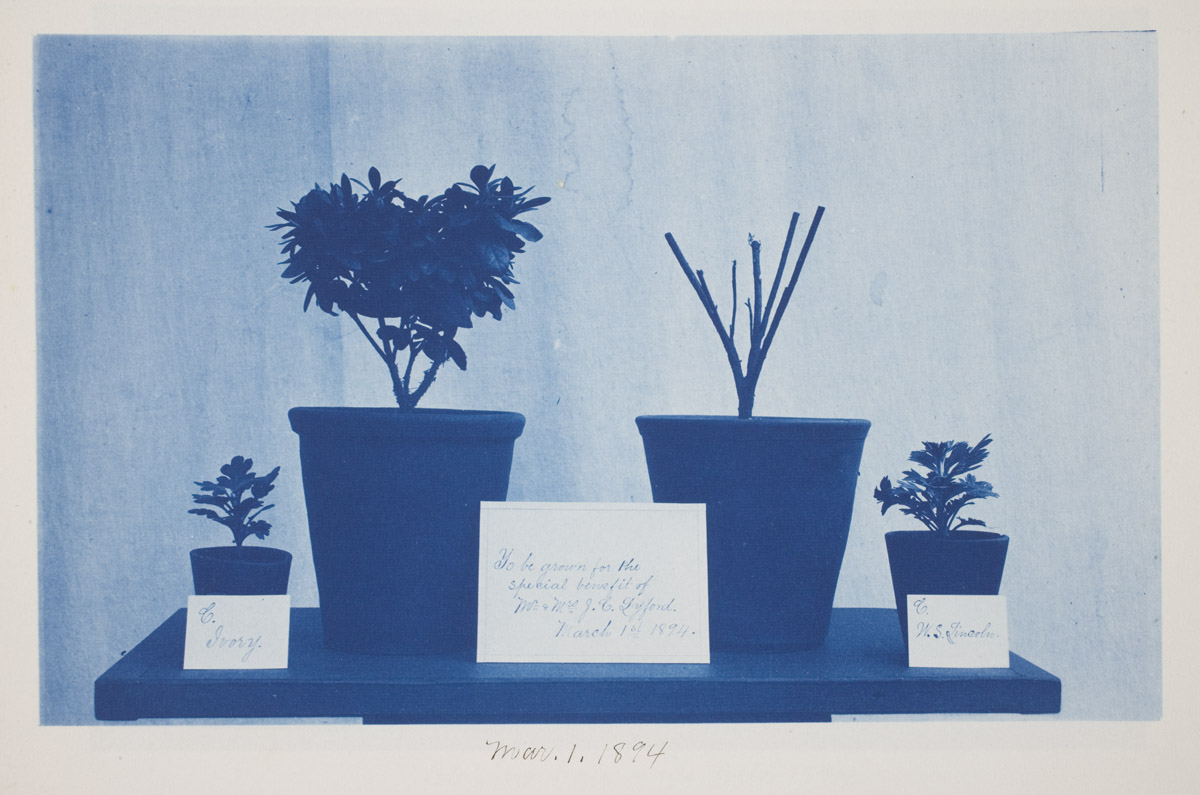
Frederick Coulson, American, 1869-1931, <em>Untitled,</em> March 1,1894, cyanotype, Eliza S. Paine Fund, 2010.271.32


January 16 - April 24, 2016Prints, Drawings and Photographs Gallery

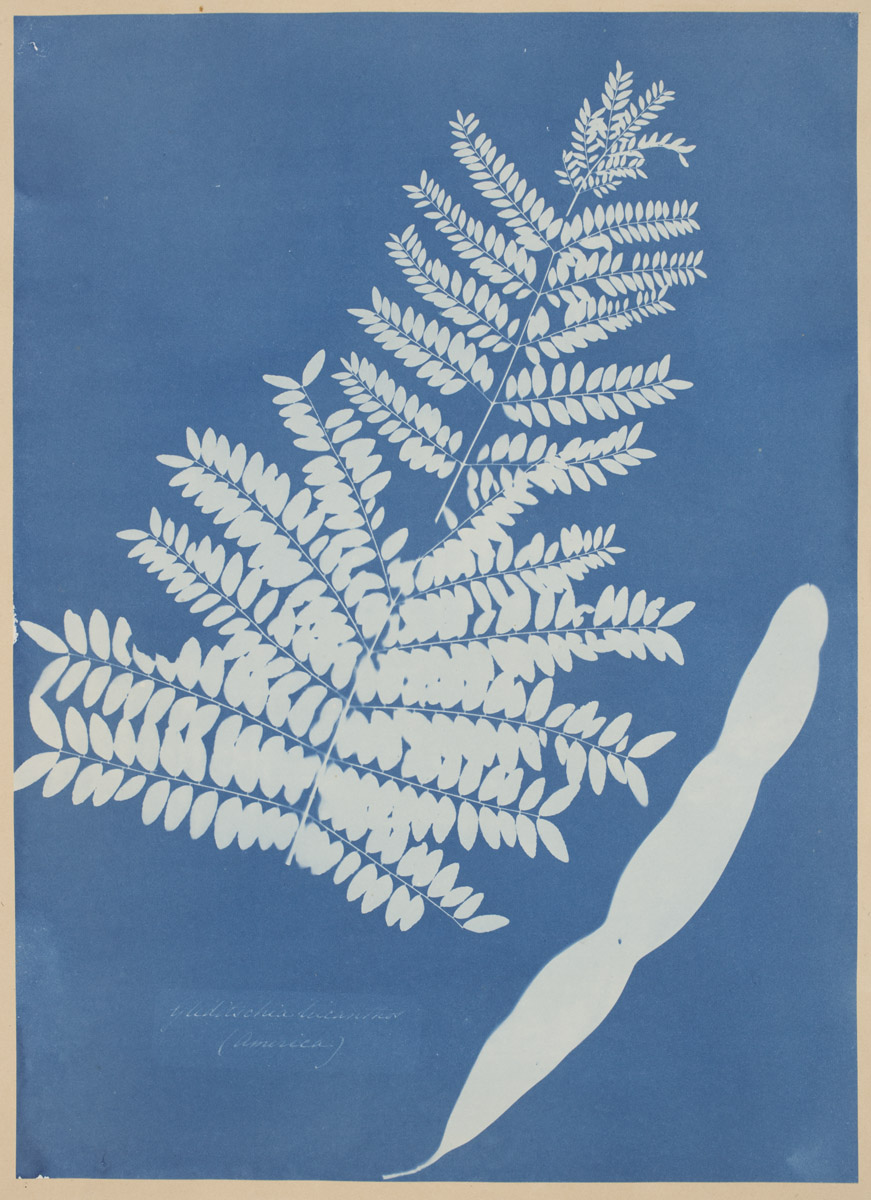
Invented by Sir John Herschel in 1842, cyanotypes are photographs with a distinctive Prussian blue tonality produced by treating paper with an iron-salt solution. The treated paper can be developed using only the sun, which made cyanotypes a favored technique among amateur photographers through the turn of the twentieth century. Cyanotypes: Photography's Blue Periodwill trace the rise of these "blueprint photographs" beginning with the botanical photogenic drawings printed by Anna Atkins in the 1850s. The exhibition will also feature contemporary artists who have recently revived the process manipulating the medium to varied expressive effects.
Organized in collaboration with a seminar from Clark University, the exhibition will be presented with thematic emphasis on botanicals, landscape, abstraction, and portraiture—areas that dominated much of the production of cyanotypes in the early twentieth century and recur in contemporary work. Artists on display include nineteenth and twentieth-century photographers Henry Bosse, Edward Sheriff Curtis, and F. Holland Day, and contemporary artist Christian Marclay.
Sponsored in part by:

Select Images

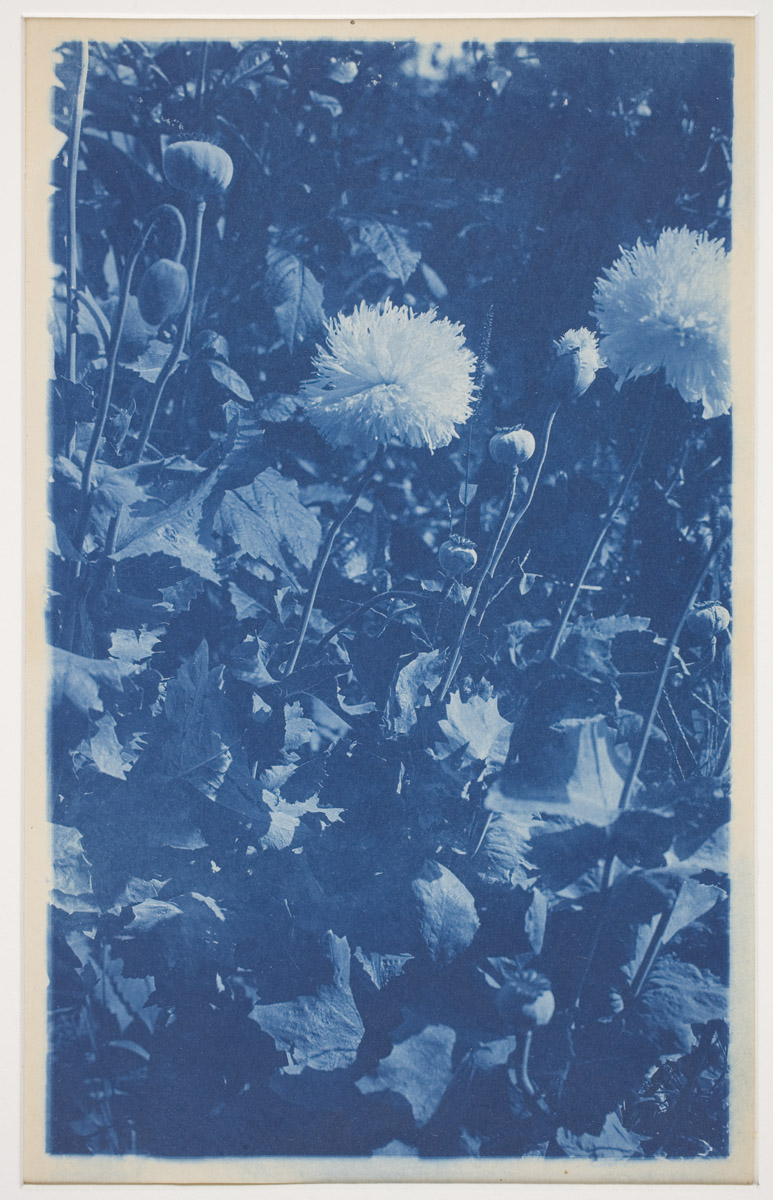
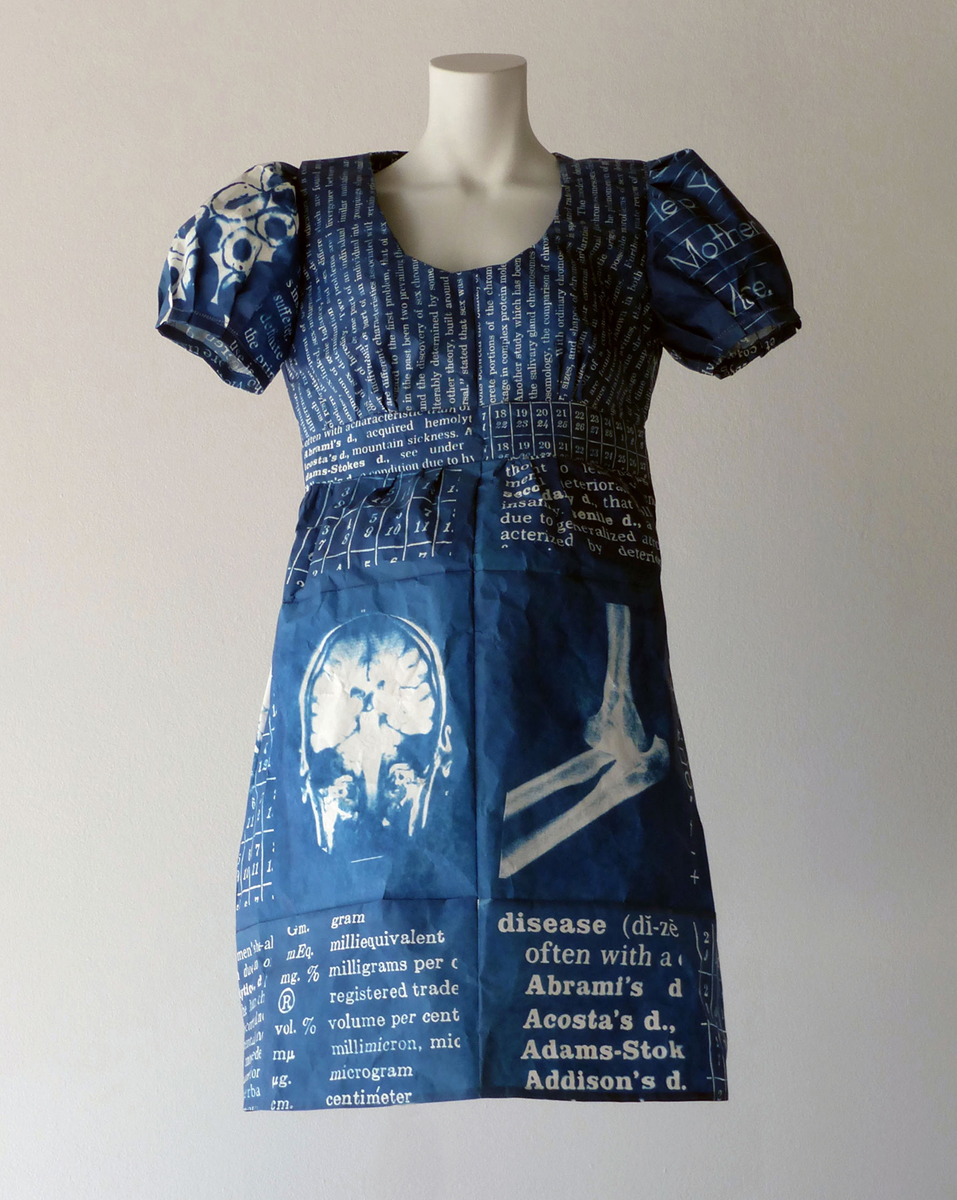
Anna Atkins, British, 1799-1871, <em>Honey Locust Leaf Pod,</em> about 1854, cyanotype, Stoddard Acquisition Fund, 1989.9Arthur Wesley Dow, American, 1957-1922, <em>Flowers with Pods</em>, about 1895, cyanotype, Sarah C. Garver Fund, 1997.74Christian Marclay, American, Unwound Cassette Tape, 2012, cyanotype, Courtesy of Elizabeth and Michael Marcus, E.90.15.1Annie Lopez, Medical Conditions, 2013, cyanotype printed on tamale wrapping paper, Courtesy of the Artist, ©Annie Lopez

Related Event


Cyanotypes: An Evening in Blue

February 18, 2016 6-8pm
Please join us as the Worcester Art Museum celebrates the publication of Cyanotypes: Photography's Blue Period, the catalogue associated with WAM's groundbreaking exhibition tracing the history of the cyanotype from the 1850s to the present.

From 6 to 7pm, tours will be offered by co-curators Nancy Burns (Assistant Curator of Prints, Drawings and Photographs) and Kristina Wilson (Associate Professor of Art History, Clark University), as well as the Clark seminar students who spent a semester researching this antique photographic process. Music, hors d'oeuvres, and a cash bar will be available throughout the event. Contemporary artists featured in the exhibition will also be on hand to celebrate. Join the fun and come dressed in your best blues! Free with Museum admission.

1/14/16

Long-lost home movies reveal one couple's love story

For all the valentines lovers out there here is another one from the pastFairpoint town historian Bill Poray was given home movies from the 1930s the box was labeled “Kodachrome experiment.” he searched for the girl who appeared to be the object of the camera operator's affection. Steve Hartman tells the story of what he found.


10/30/15

An hommage to horror moms

‘It Felt Like The Right Time’ 

 Jamie Lee Curtis has been paying homage to her horror film roots with her role in Fox’s new series,“Scream Queens recreating her mother, Janet Leigh’s, infamous shower scene from “Psycho.”  


Christina Ricci, who as a child famously portrayed Wednesday Addams, dressed up as Morticia Addams...proven to be a photoshop but still a great image. 


10/5/15

A Vanderbilt Halloween

vanderbilt1


Some ideas for a new look at old costumes. You don't have to be half dressed  to look stunning. This is from one of the many Vanderbilt balls that were the height of society. Press were invited to photograph the guests with backdrops possibly added later. Click here for the full guest list.

8/22/15

Julia Margaret Cameron Victorian Celebrity photographer

Visiting Birr castle in Ireland recently I started reading up on early women photographers and Julia "caught my eye" 

The Parting of Lancelot and Guinevere

Artist: Julia Margaret Cameron (British (born India), Calcutta 1815–1879 Kalutara, Ceylon)
Date: 1874


A little bio from the MOMA

" one of the greatest portraitists in the history of photography, Julia Margaret Cameron (1815–1879) blended an unorthodox technique, a deeply spiritual sensibility, and a Pre- Raphaelite–inflected aesthetic to create a gallery of vivid portraits and a mirror of the Victorian soul."
"When she received her first camera in December 1863 as a gift from her daughter and son-in-law, Cameron was forty-eight, a mother of six, and a deeply religious, well-read, somewhat eccentric friend of many notable Victorian artists, poets, and thinkers. "From the first moment I handled my lens with a tender ardour," she wrote, "and it has become to me as a living thing, with voice and memory and creative vigour." Condemned by some contemporaries for sloppy craftsmanship, she purposely avoided the perfect resolution and minute detail that glass negatives permitted, opting instead for carefully directed light, soft focus, and long exposures that allowed the sitters' slight movement to register in her pictures, instilling them with an uncommon sense of breath and life.
"Cameron's three major bodies of work: portraits of men "great thro' genius," including painter G. F. Watts, poet Alfred, Lord Tennyson, scientist Sir John Herschel, and philosopher and historian Thomas Carlyle; women "great thro' love," including relatives, neighbors, and household staff, often titled as literary, historical, or biblical subjects; and staged groupings such as her illustrations for Tennyson's Idylls of the King or her Annunciation in the style of Perugino."

See more of her subjects here

And Here

6/7/15

The Chemistry Of Fraudulent Photographs


Esther Inglis-Arkell


The Chemistry Of Fraudulent Photographs
In the 1970s, newly-discovered pictures of “Victorian waifs” were a hit with both historians and art collectors. The chemistry seemed right. The context . . . not so much. But people only learned that too late.
In 1974, the work of Francis Hetling delighted the academic world. Hetling was a diarist and amateur photographer. He’d toured London taking photographs of Victorian orphans in Barnardo homes — homes set up in the 1870s by a philanthropic doctor, Thomas Barnardo. Although poor children were fashionable subjects for photographs, the Victorians liked their waif tableaux staged. Well-to-do children were given fake rags and often put in rural settings. Seeing what actual poor children looked like was an opportunity.
Of course, experts checked it out. The “photographs” were actually “calotypes,” or “talbotypes.” This added to the plausibility of the story. These types of images were an innovation in photographic technology. People had known for hundreds of years that certain preparations of silver would discolor when exposed to the light, and that this could be combined with a camera obscura to create images. The problem was making the images dark enough, detailed enough, and permanent enough. Many photographic methods in the 1870s required that people stayed put for up to an hour at a time, and some required heavy and delicate glass plates.
The Chemistry Of Fraudulent Photographs
Calotypes shorted the process to a couple of minutes, and required a sheet of prepared paper. Essentially, the piece of paper would be prepared with potassium iodide and silver nitrate — both light sensitive — and then stored for as long as the photographer liked. At the last minute, before the photograph was taken, it got washed in a solution of more silver nitrate and gallic acid. It could be exposed for as little as ten seconds, but usually more like a minute or two, depending on the light. The paper had no visible image on it. It was only later, by repeatedly washing it with more silver nitrate and gallic acid that a negative became visible. Once the photographer fixed the negative, they could then press this negative against a paper that had more traditional chemicals in it, and expose the image for as long as they liked. The final image would have at least traces of the chemicals used in the calotype process in it. The Hetling images did, although investigators could not be absolutely certain.
So it wasn’t the chemistry that caught “Francis Hetling.” It was a man who recognized the eleven-year-old daughter of a guy he knew. The girl turned out to have had her picture taken by Howard Grey, and man who worked in advertising and knew that nostalgia sold well. He staged pictures of Victorian waifs, and then gave them to Graham Ovendon, an artist who knew how to fake a photograph. The two weren’t exposed until 1978.
Looking back on the disaster, some art critics have found fault with one particular photo. We can see that it’s a poignant photo, and one that casts doubt as to the ethics of the photographer. A child in rags throws her hand in front of her face, ashamed to have her picture taken. But poor children of that time wouldn’t have had a concept of the notoriety or permanence that photographs could bring. More importantly, with the benefit of hindsight, it’s easy to see that there is too much motion in the photograph for it to have been taken at the time. It appears to be a quick, improvised gesture. The girl would have had to have frozen in that position for at least ten seconds, and possibly more like a minute or two, given the low light around her.
Grey and Ovendon were tried for fraud in 1980, but not convicted. The photographs, some of which had hung in the National Portrait Gallery, were taken down.

2/18/15

25 Years of Beautiful, Fake Images Brought to You By Photoshop

by Matt Novak
 

25 Years of Beautiful, Fake Images Brought to You By Photoshop
Happy birthday Photoshop! You might be turning 25 this week, but you don't look a day over 20. (We suspect you've had some photoshopping done.)
It's no secret that Adobe Photoshop didn't invent image manipulation. People have been dramatically altering photos since the invention of photography itself. But Photoshop pushed image tinkering into the digital age, and much like other tools of the digital revolution, helped bring photo fakery to the masses.
Below we look back at just a few of the photoshops (yes, it's a generic term now, whether Adobe likes it or not) that would become famous and infamous.

Reading is fundamental

25 Years of Beautiful, Fake Images Brought to You By Photoshop
Does anything look fishy about this image of President George W. Bush? His book might be upside down, but that's all thanks to a little Photoshop trickery.

CCTV cameras outside George Orwell's house

25 Years of Beautiful, Fake Images Brought to You By Photoshop
Is that really a CCTV outside George Orwell's famous house? No, it's not. It's from a series of photoshopped works by artist Steve Ullathorne.

Computer of the future from 1957

25 Years of Beautiful, Fake Images Brought to You By Photoshop
This "computer of the future" which purports to be from the 1950s is too good to be true. Back in 2007 Fark hosted a photoshop contest, and thanks to the magic of the internet, this one quickly went viral. The only problem? People were soon passing it off as real.

Supermoon

25 Years of Beautiful, Fake Images Brought to You By Photoshop1
Like so many supermoon photos, this one is a fake. I'm no moonologist, but if the moon was really that big on any given night I'm pretty sure we'd all be dead by now. Because tides or something.

Putin bunny ears

25 Years of Beautiful, Fake Images Brought to You By Photoshop
This photo of Putin-pal Steven Seagal giving bunny ears spread far and wide on social media. And yes, Seagal is buddies with Putin. But those fingers are fake. Certainly makes you wonder what the sly look is all about though.

9-11 Guy

25 Years of Beautiful, Fake Images Brought to You By Photoshop
Of all the early 2000s photoshops to go viral, "9-11 guy" is one that sticks out in my mind as particularly shocking. You can tell almost immediately that it was fake, given the bad timestamp. But 9-11 was still so fresh in everyone's minds that the fact anyone would make such a thing was pretty damn shocking. The original story most commonly attached to this photo? It was found on some undeveloped film in the wreckage of the Twin Towers.

Underwater train

25 Years of Beautiful, Fake Images Brought to You By Photoshop
There are so many photoshops that are simply too good to fact-check. And this "underwater train" is one of them. We wanted to believe that real life was like Harry Potter movie or something. Too bad it's a fake.

Obama smoking

25 Years of Beautiful, Fake Images Brought to You By Photoshop
Election season brings out the photoshops like none other. And, as you can imagine, Obama got more than his fair share of photoshops in both 2008 and 2012. The one that's most interesting is perhaps the most plausible. Obama has been an occasional smoker and struggled to quit. But this photo of him with a cigarette dangling from his mouth is fake.

Buddha carved in stone

25 Years of Beautiful, Fake Images Brought to You By Photoshop
You may have seen this remarkable image of "Buddha" carved in stone. Too bad it's a total fake, created by internet artists. I talked with the creator last year and when I asked about his images that were "clearly photoshopped" he shot back that to him they were all "clearly photoshopped." The photoshopness is clearly in the eye of the beholder.

Northern Lights

25 Years of Beautiful, Fake Images Brought to You By Photoshop2
 
Which brings us to the gif at the top of this post. As you can see, it's not the Northern Lights of Alaska. The background is actually a panoramic image of the Orion Nebula, taken from the Hubble telescope. Well done, for sure! But totally fake.
So what's your favorite Photoshop of all time? Did any of these fool you when you first saw them?


2/15/15

Video Series Walks Through the Major Photographic Processes Used Throughout History

Back in 2012, the George Eastman House made a series of six videos showing the six photo processes used in the history of photography. Now  George Eastman House has re-released those six videos alongside six new ones. From the Daguerreotype all the way up through digital photography.
Here is the first in the series. Click the link for the entire list of 12 videos.


9/24/14

Lee Miller: In Hitler’s bathtub


By Fiona Macdonald


Lee Miller (David E Scherman/Lee Miller archives, England 2014. All rights reserved)
Vogue model, Surrealist muse – and war correspondent. As a combat photographer with the US forces during WWII, Lee Miller created a unique historic record.

“I was living in Hitler’s private apartment in Munich when his death was announced.” These words came not from a high-ranking Nazi officer or a hardened Allied soldier, but from a fashion model-turned-photographer. Lee Miller – who became the muse and lover of Surrealist artist Man Ray during the early 1930s after appearing on the cover of Vogue – was one of a small number of female combat photographers embedded with Allied troops in WWII.
Her account of their advance in Western Europe has been put together from manuscripts, negatives and contact sheets for the new book Lee Miller’s War: Beyond D-Day. After her death in 1977, Miller’s son Antony Penrose discovered the records in trunks in her attic. In the book’s afterword, he describes finding “maps still splattered with Alsatian mud, captions and notes scribbled on scraps of paper, orders and passes from the military, looted souvenirs”.
Miller’s photographs and reports appeared as spreads in Vogue between 1944 and 1945. “The gore and violence of her articles feature boldly in the pages,” says Penrose. “The grim skeletal corpses of Buchenwald are separated by a few thicknesses of paper from delightful recipes to be prepared by beautiful women dressed in sumptuous gowns.”
Evacuating wounded in Normandy (Lee Miller archives, England 2014. All rights reserved)

Miller rarely talked about the war in the years that followed – Penrose describes how she spent them “in a misery of depression and alcohol abuse” – but she gave evocative accounts in her reports for Vogue.
“The ward was like a jungle of banyan trees. A maze of hanging rubber tubes swaying in khaki shadow – one to the nostril and one to the wound of each man.” Miller’s description of an evacuation hospital near Omaha beach in Normandy was published in the fashion magazine in August 1944. Her story, Unarmed Warriors, was Miller’s first as a war correspondent accredited by the US Forces.
“The authorities had figured that ‘hospital’ meant lots of nurses so Lee would feel at home and Vogue’s sensibilities would not be offended. They were wrong on both counts,” writes David E Scherman in the foreword to Lee Miller’s War. Instead, she “was happiest with GIs, wounded or otherwise … and Vogue printed, and continued to print until the end of the war, whatever martial violence or gore that Lee turned up.”
A photographer for Life magazine, Scherman became Miller’s mentor, and the pair gained a reputation for being the first on the scene. With soldiers of the 45th division, in April 1945 they discovered Hitler’s Munich apartment – where Scherman captured the iconic bathtub shot. “Lee took a leisurely, overdue bath in Hitler’s tub while an angry lieutenant of the 45th, soap in hand, beat on the locked door outside.” They also accompanied the first Allied troops to see Hitler’s Alpine retreat in Berchtesgaden.
According to Penrose, the bathroom portrait was a loaded image. He told The Telegraph: “I think she was sticking two fingers up at Hitler. On the floor are her boots, covered with the filth of Dachau, which she has trodden all over Hitler’s bathroom floor. She is saying she is the victor.”
Aerial bombardment of St Malo (Lee Miller archives, England 2014. All rights reserved)

Miller spent time on the frontline too: after reports that St Malo had been liberated in August 1944, she was sent on a seemingly safe assignment to report from the French town. But when she arrived, she discovered it was still held by German forces. From a hotel room, Miller documented the gunfire in her own inimitable style: “The rooms had innerspring mattresses which made a rather bouncy perch for picture-taking, especially as the artillery bursts made me jump a bit each time.” She describes two soldiers lying on a bed “in a beautiful honeymoon room facing the sea”, with a telescope trained on their target.
Her frontline reportage has a poetic quality: long-range artillery etched “arcs of sound” over her head, creating “invisible sphere-songs with their trailing rattle”. Scherman called her story on a battle in Alsace “one of the best examples of frontline reporting ever filed”.
Fred Astaire signing autographs (Lee Miller archives, England 2014. All rights reserved)

Miller regretted leaving the front, and wrote in a letter to her Vogue editor “it is very bitter to me to go to Paris now that I have a taste for gun powder”. Scherman described the scene that met them in the liberated city: “It was an orgy of tanks, flags, newsmen, German snipers, cheering crowds and crazy, over-elaborate Paris fashions. We expected ill-clad grey mice and found cork-shod, balloon-skirted, high-coiffed beauties… Lee immediately looked up old friends, including a delighted Picasso.”
A world away from the battlefront, in Paris Miller photographed Marlene Dietrich in a satin coat by Schiaparelli and Fred Astaire signing autographs for the “bare-bottomed girls of the cast in feathers”. Yet she never settled back into her pre-war life. In a 1945 letter to Scherman, she describes her restlessness: “for some reason I always want to be somewhere else”.